
Why people try to bring someone back
April 7, 2026
Between February and April 2026, 10,660 people went through Pantio's onboarding flow to create a digital persona of someone who died. During onboarding, they provided the person's name, age, personality traits, and a free-text description of their relationship. We anonymized and aggregated this data to understand who our users are, who they're recreating, and what they want from the product.
It's almost always a parent
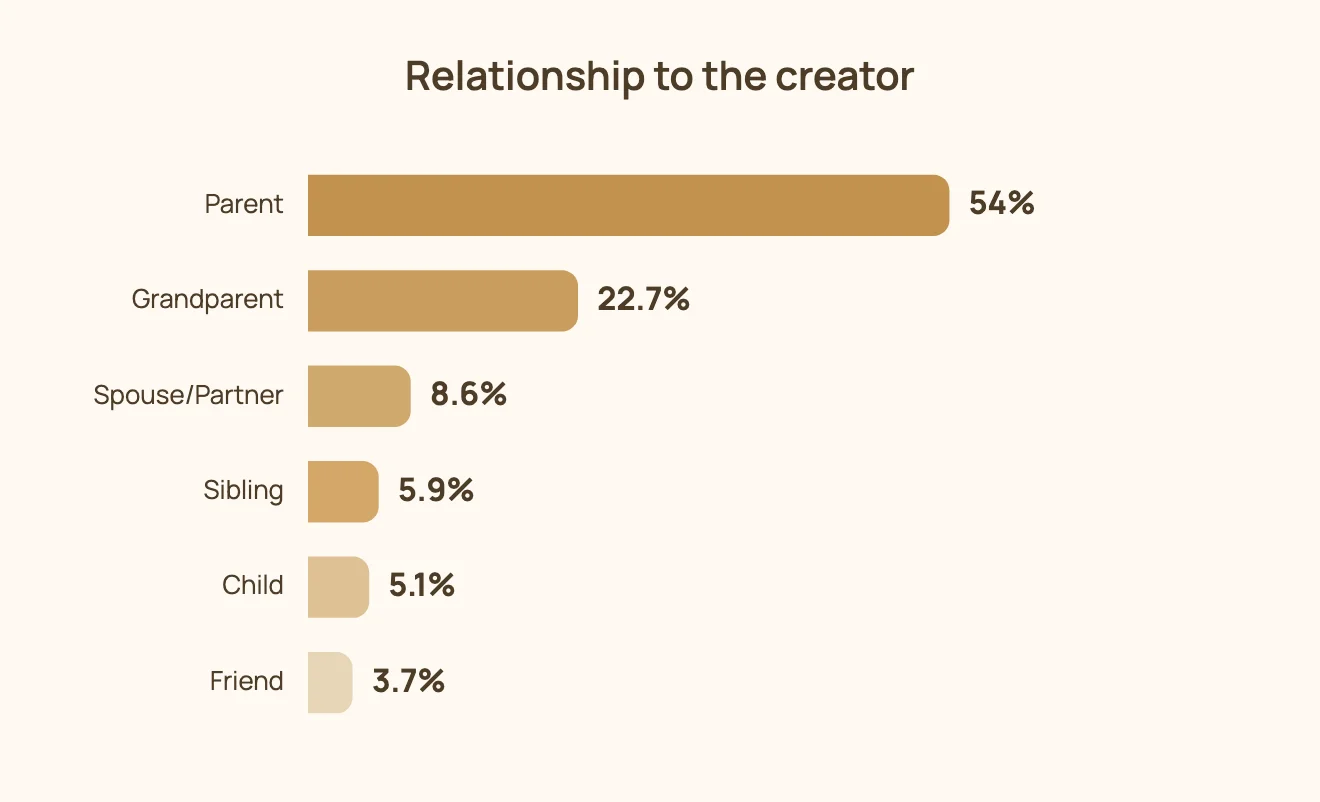
54% of personas are parents. 23% are grandparents. Combined, 77% of all personas belong to the generation directly above the user.
The remaining 23% is distributed across spouses and partners (8.6%), siblings (5.9%), children (5.1%), and friends (3.7%). This distribution has been stable week over week throughout the two-month period.
A younger generation
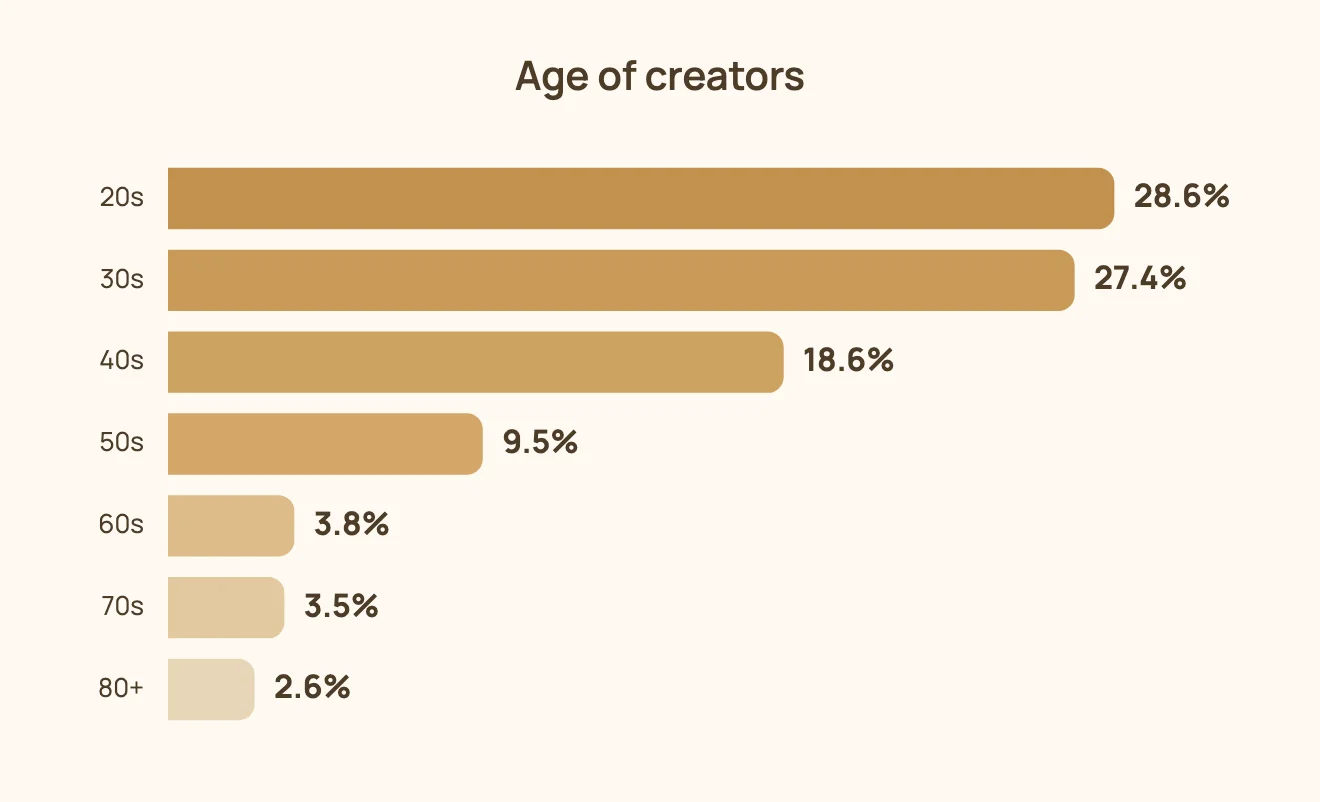
The median user age is 35. Users in their 20s make up 28.6% of the total, followed by 30s (27.4%) and 40s (18.6%). Users over 60 account for about 7%.
This means the product is primarily used by millennials and Gen Z recreating baby boomers — the generational pattern that matches the relationship data above.
The gender split
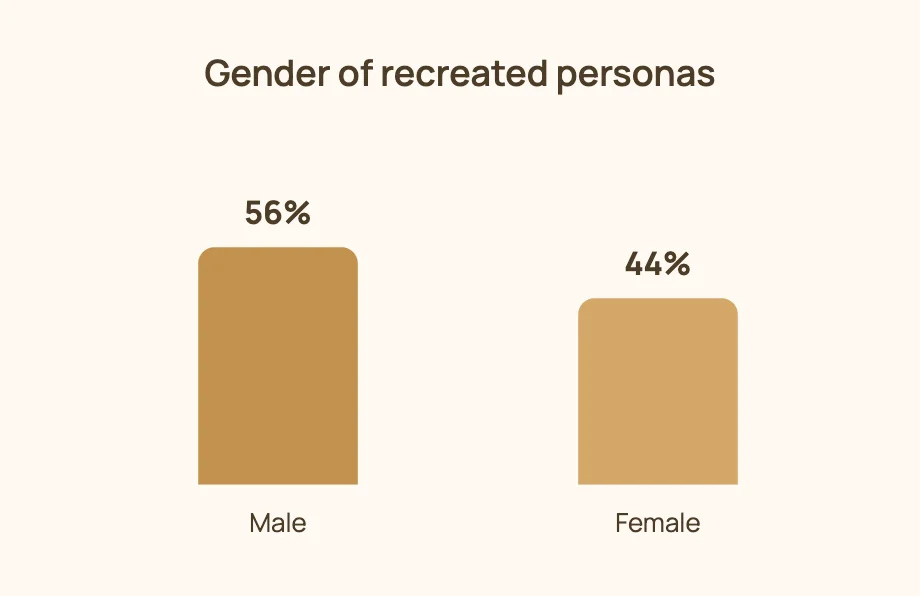
Overall, 56% of recreated personas are male and 44% are female. But the ratio varies significantly by relationship type.
Among spouses and partners, 90% of personas are male, indicating that it's predominantly women recreating husbands. Grandparent personas skew 62% female. Parent personas split 56/44 male to female. Children and siblings skew male at 66% and 70% respectively.
Why they come here
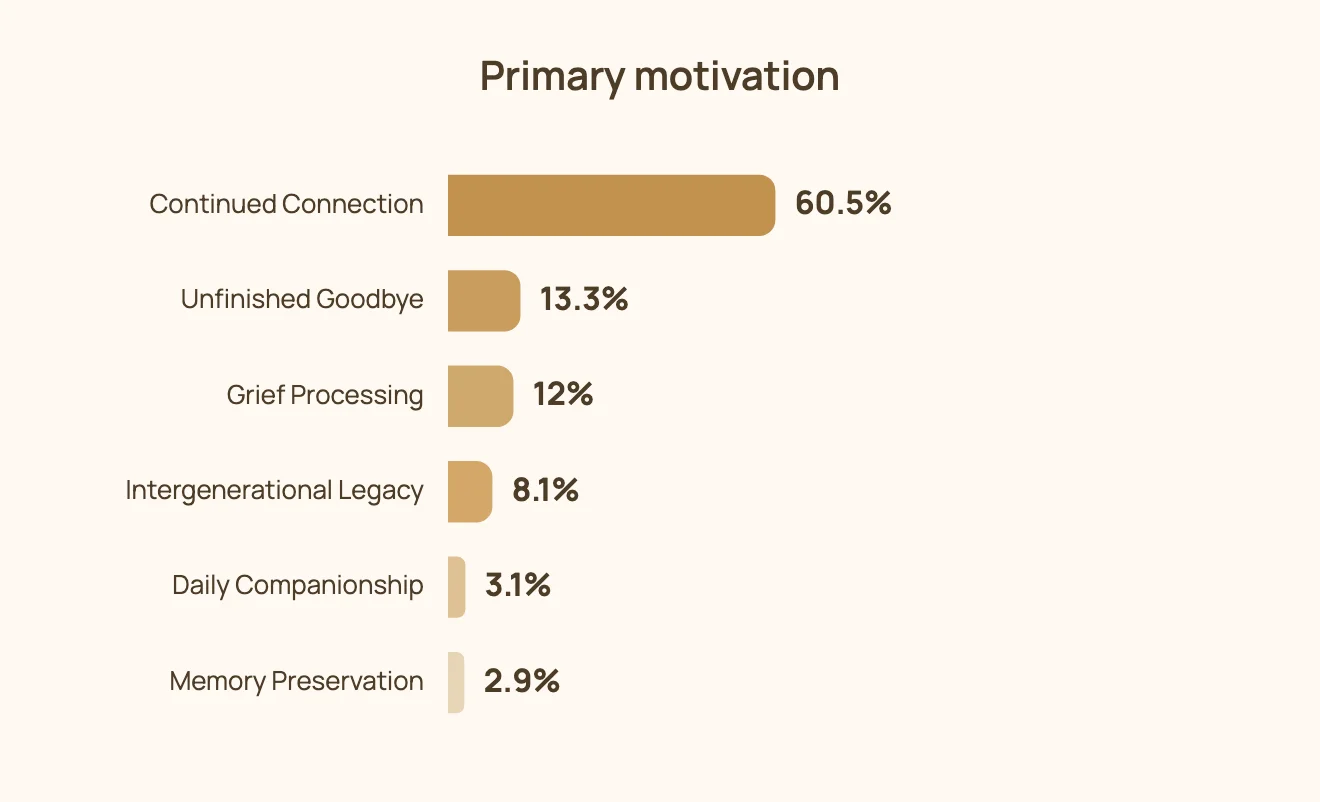
We classified 4,891 free-text responses into six categories by primary intent. The dominant category is continued connection at 60.5% — users who describe wanting to feel close to the person again.
The next three categories are unfinished goodbye (13.3%), grief processing (12%), and intergenerational legacy (8.1%, users who want their children to know the person). Daily companionship (3.1%) and memory preservation (2.9%) make up the remainder.
The distinction between the top category and the third is worth noting: most users frame their intent as maintaining an ongoing relationship, not working through acute grief. This has implications for how the product should be designed — less therapeutic intervention, more ambient presence.
The voice gap
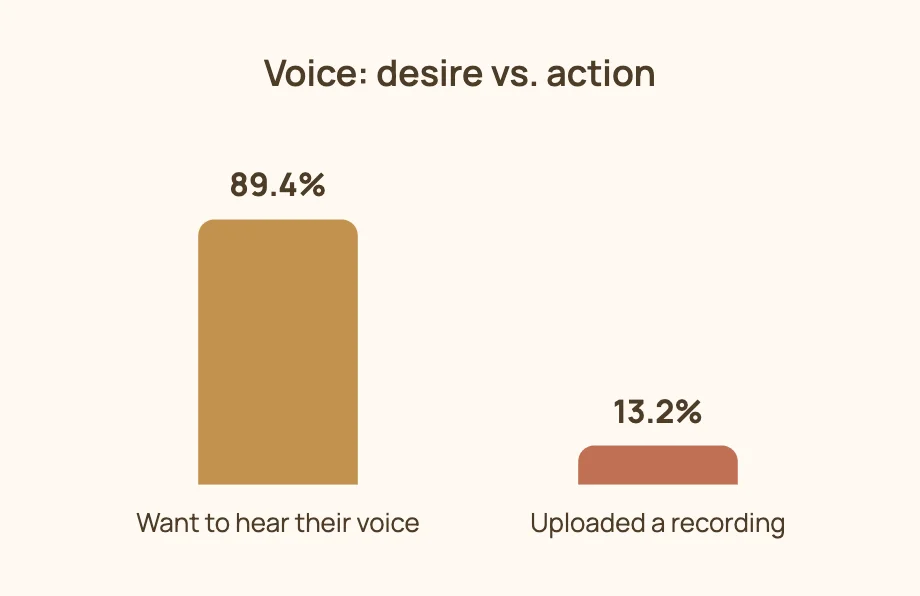
89.4% of users select "hearing their voice" as the thing they miss most about the person. Yet only 13.2% upload a voice recording during onboarding. This 76-point gap represents 3,868 users in our dataset who want voice but can't provide a sample.
Upload rates correlate with relationship closeness: users who lost a child or spouse upload at 22%, while those recreating grandparents upload at 8.3%. This likely reflects how much recorded material people have of the person.
Users who upload a voice recording complete onboarding at 33.8%, compared to 9.1% for those who don't — a 3.7x difference.
Summary
The typical user is in their early 30s and has lost a parent. Three out of four personas are parents or grandparents. The primary motivation is continued connection — the same pattern that Klass, Silverman, and Nickman documented in 1996 when they studied bereaved parents who kept their children in their lives and were doing fine.
The data confirms what thirty years of continuing bonds research predicted: when given the option, most people choose to maintain the relationship rather than process the loss. 60% of our users say so explicitly.
The voice stands out in the data. 89% of people say hearing the person's voice is what they miss most — but only 13% have a recording to provide.